Heavy-Duty Storage for High-Risk Chemical Operations
Industrial Chemical Tanks in Scurry for Large-Scale Manufacturing and Process Plant Containment
Oliver Industrial Sales provides industrial chemical tanks to manufacturing plants, processing facilities, and large-scale operations in Scurry that handle high-capacity, high-risk chemical containment under demanding conditions. When your operation stores concentrated sulfuric acid for metal pickling, caustic soda for pulp processing, or volatile solvents for parts cleaning, standard tanks lack the structural strength, material compatibility, and safety features needed to prevent catastrophic failure and regulatory penalties. Industrial tanks are built with reinforced sidewalls, specialized coatings, and engineered supports that handle high volumes, elevated pressures, and aggressive chemical environments.
These tanks are constructed from materials including carbon steel with epoxy or rubber linings, stainless steel alloys for corrosive service, and fiberglass-reinforced plastic for applications requiring both chemical resistance and structural rigidity. You choose a tank based on the specific gravity and reactivity of the stored chemical, the pressure and temperature conditions during operation, and the site layout that determines tank orientation and footprint. Tanks include manways for inspection and cleaning, nozzle connections for pumps and instrumentation, and venting systems that manage vapor pressure without releasing hazardous fumes.
Oliver Industrial Sales can review your chemical properties, site constraints, and compliance requirements to recommend tank specifications in Scurry.
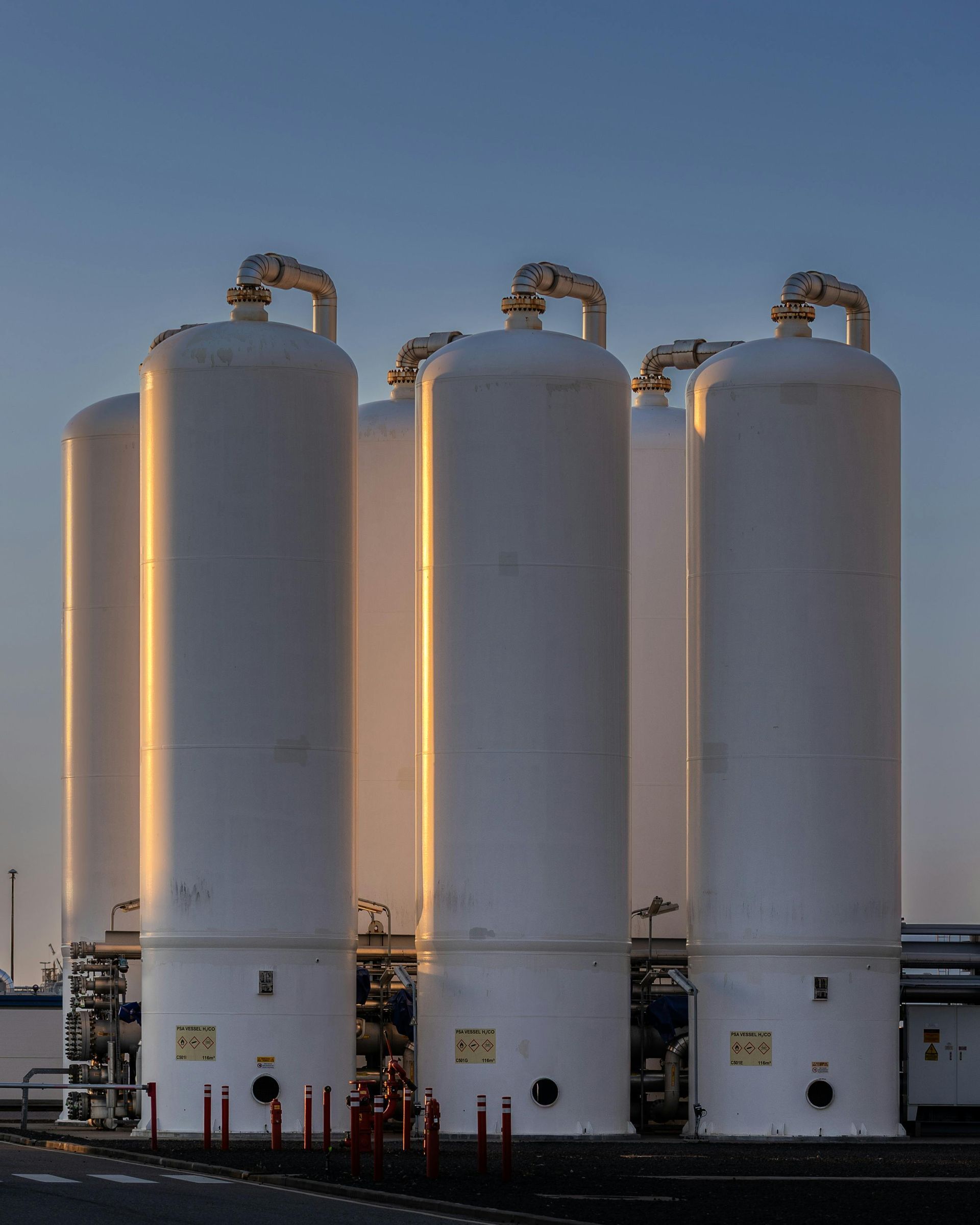
How Industrial Tanks Handle High-Capacity Chemical Storage
You install the tank on a reinforced concrete foundation designed to carry the full weight when filled, anchor it with seismic restraints if required by local codes, and connect it to secondary containment basins sized to capture the entire tank volume in case of rupture. The tank shell is welded or bolted in sections with gaskets rated for the stored chemical, and internal coatings or liners are applied to prevent direct contact between the chemical and the base metal. You monitor liquid level, temperature, and pressure using sensors mounted in flanged ports, and you connect transfer pumps and piping to inlet and outlet nozzles positioned for efficient flow without dead zones.
After commissioning, you see stable chemical inventory without level drops from leaks, accurate readings from instrumentation that tracks usage and delivery schedules, and safe access to the tank interior through manways that seal tightly when closed. The tank withstands thermal expansion and contraction without cracking, handles repeated fill and drain cycles without fatiguing, and maintains containment even when external impacts or settling occur.
Industrial tanks include ladder access, platform walkways, and guardrails that meet OSHA fall protection standards if the tank height requires personnel access for inspection or maintenance. They often incorporate heating jackets or cooling coils if the stored chemical must stay within a narrow temperature range, and vapor recovery or scrubber connections if the chemical releases volatile organic compounds. These tanks do not include pumps, mixers, or controls, which you specify separately based on your process requirements and automation strategy.
Key Questions About Industrial Tank Selection
Plant managers often ask about material selection, code compliance, and long-term maintenance when planning new chemical storage installations or upgrading aging tanks.
Oliver Industrial Sales works with manufacturing and processing operations in Scurry to specify tank materials, capacities, and compliance features that match chemical hazards and site conditions. Reach out to discuss your industrial storage needs and confirm tank availability.